



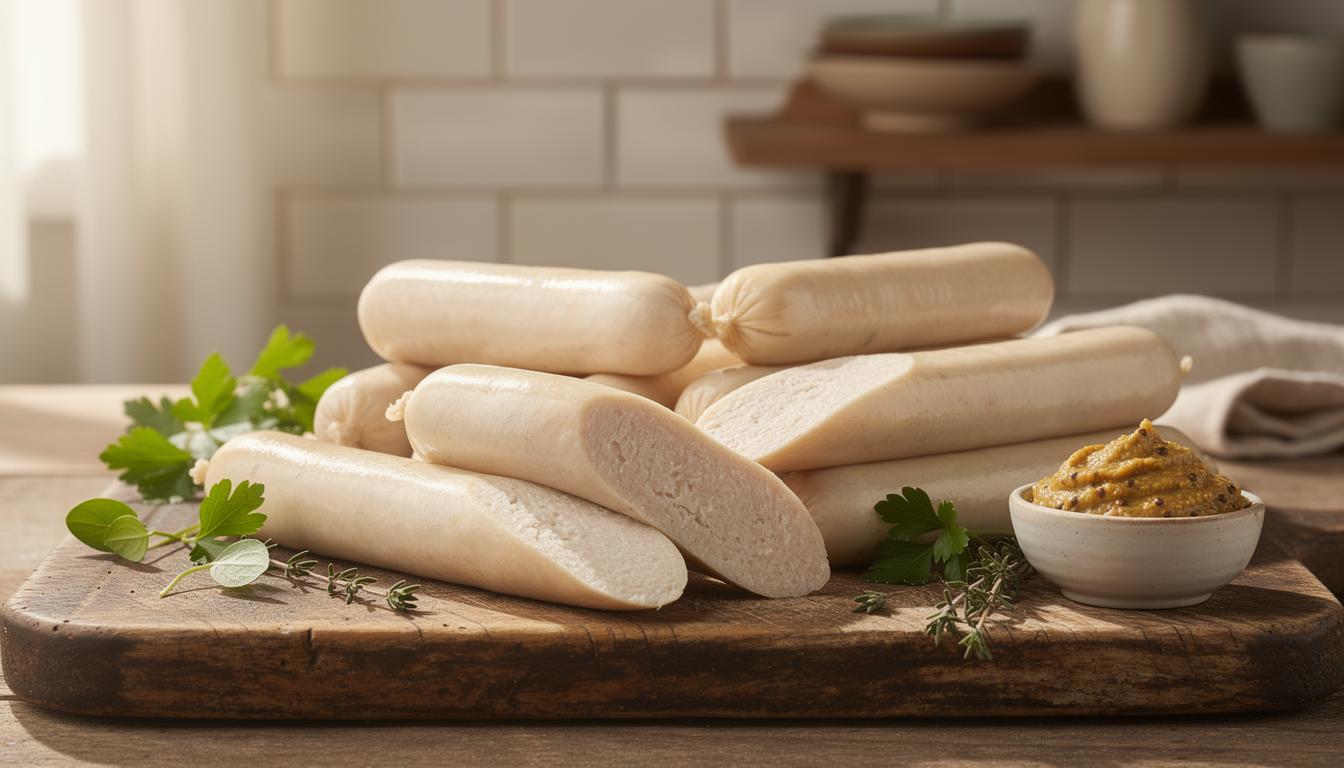
The aroma of white sausage hovers in the market, unmistakable, always a bit different than others, noses rise, attention wakes. French cuisine cherishes its icons, but the Rethel white sausage PGI, gentle and pale, never shouts, it wiggles into memories, quietly, without spectacle. The question drags along, why does this sausage in particular spark loyalty stronger than any summer rain on the Ardennes? Everyone wants their regional gem, but not every recipe travels so far, not every product earns protected status.
Stall by stall, tradition glimmers and regulations do not yield, mouths gather, the question returns: what makes an authentic Rethel link worth its blue-yellow badge?
Also to read : What are the benefits of using a cast iron skillet over a nonstick pan?
The Rethel White Sausage PGI Status, a Pillar of Recognition
Packed initials, PGI, they slip onto the label and everything changes, a village recipe wears European colors, boundaries ripple. History and expertise, yes, but documents bind it all tighter, paperwork as old as the hills. Only butchers within a circle around Rethel stamp this sausage as their own, neighbors hush, boundaries hold. Does anyone outside the Ardennes dare ignore such rules? No, they create, but labeled differently; regulated by a European framework that crowds out shortcuts, every detail—sourced pork, seasoned with moderation, no hint of faking.
Craft, place, method, all weighed by the Institut national de l’origine et de la qualité, every batch traced, every ingredient tested, nobody argues with a PGI audit. The producers beam with pride, even the festival crowds squint for the certified logo before buying, everyone recognizes the stakes: local know-how protected, no risk of bland imitations leaking into grocery bags, loyalty reinforced with every bite. Authentic products like the rethel white sausage pgi now reach wider markets while preserving their heritage.
In the same genre : Swiss wine: an exploration of quality, diversity, and tradition
The Stamp and Its Influence on French Regional Treasures
Every food-lover in France knows, regional pride can hinge on an unbreakable seal, the PGI. For Rethel white sausage PGI, this mark sweeps aside ambiguity, binds butcher to land, recipe to history. Ask any chef or grandparent in Rethel, their voice softens, their gestures sharpen, everyone checks the rules maintain what matters. The PGI does not become a shield alone, but a display window where tradition stands unbent, every sausage a proof of survival, of taste not diluted across chains or years.
The Requirements Guarding Rethel’s Heritage
Comparisons rattle, some recipes pass with less scrutiny, but not this one.
| Criteria | Rethel White Sausage PGI | Generic White Sausage in France |
|---|---|---|
| Production Area | Confined to Rethel precincts and select neighboring villages | No region limits |
| Ingredients | Premium pork, banned colorants, no chemical preservers | Pork, veal, open to additives |
| Preparation | Hand-chopped, natural casing, gentle poaching in low temperatures | Industrial methods, possible artificial casing |
| Quality Control | PGI inspections, traceability on every step | Company-guided controls, fewer constraints |
Nothing slips by, regulations hold the line between living heritage and forgettable sausage, the pedigree speaks louder at every fair or market stall.
The Ingredients and Craftsmanship Inside Rethel White Sausage
Pork, always, but not the tired ends of a carcass, only the finest muscle, never colored, never bathing in preservatives, pride always replaces shortcuts. Producers talk about these pigs as if they raised them like family, Ardennes fields feeding animals seen by generations. Spices, a precise hand delivers nutmeg, white pepper, never drowning the whole melody. Charcuterie Maire, Maison Romain, and others defend their sources, some whisper secrets about subtlety; others simply wink—everyone agrees on origin and respect.
Pale, never aggressive, every bite balanced, nothing overpowers, you sense the invisible care, the work behind the scenes, the stories flowing from breeder to chef and back again.
The Matter of Ingredient Origin
Pork, not caught at random, but the leanest slices, careful selection replaces chance. Recipes say no to artificial colors, no to preservatives, salt and tradition do the work instead. Even the pepper wears a badge, regional, noble, nutmeg comes along, understated. Transparency rules: producers know the pigs, the feed, dates, and names. Trust weaves through every transaction, neither sellers nor customers find reason to hide anything.
The Steps Carving Out a Signature Taste
No industrial machines grind this filling, patience leads, knives level the meat on wood, hands tire, but rituals remain cherished. Meat salted, spices sprinkled, the casing remains natural, a gentle press seals the link. No boiling storm, only poaching in calm heat, flavor locked in, moisture controlled. Cut a slice, the look surprises, the texture holds firm, every bite steadies a story centuries old.
Mechanical sameness has no foothold in the Rethel recipe, handwork resists automation, the past asserts itself with every mouthful.
The Role of Rethel White Sausage PGI in French Culinary Rituals
Spring rolls into Rethel and the fairground swells, smoke rising, laughter bouncing off stone, sausage at the center. Everyone has a recipe tale to share, grandmothers recount old feasts, schoolchildren line up for slices. The Rethel PGI sausage has not faded, it stands firm as a bridge, passing flavor from hand to mouth, one era to another. No need to modernize, traditions renew themselves around the table, memory kindled by taste and community.
The taste? A time machine, drawing connections from 17th-century feasts to present-day banquets, the locally made link transforms even the blandest plate into a conversation about belonging.
The Historic Ribbons of Rethel Sausage Tradition
Records call out to the 1600s, but memory colors the rest—fairs teeming with traders, every bite blessed by butchers who would scowl or laugh depending on the seasoning. Maison Boudet, Les Frères Barbier, the names return on every tongue, families guard recipes with a love only rivaled by stubbornness. Food pilgrims seek the authentic link, townsfolk judge, no outsider’s standard ever competes. The secret of the Rethel sausage lives not on paper, but in handed-down gestures, shared laughter, stubborn repetition.
The Cultural Power in Rethel’s Celebrations
Every event places the sausage at its center, not the other way around, culture adapts, the link remains. Fairs gather crowds, banquets celebrate the land’s bounty, school tables see young faces try tradition. No risk of losing relevance, the sausage occupies hearts as much as plates.
| Festival or Event | Traditional Practice | Cultural Symbolism |
|---|---|---|
| Annual Rethel Fair | Sausage simmered, mustard sharp, pride on every mouthful | Emblem of regional unity |
| Harvest Festivals | Served at communal tables, warmth in abundance, family circles strengthen | Affirms prosperity and continuity |
| School Gatherings | Slices for children, handed from elders, tradition slides into the next generation | Knits a town’s memory tighter |
The Flavor Profile and Culinary Uses of Rethel White Sausage PGI
Bread tears, sausage slices, a mouthful lands and reveals its secrets: spice whispers, not a punch, pork stays fresh, not masked, no smoke, no overdone salt. Bread and kitchen aromas linger, but never overwhelm, taste floats between softness and complexity, comfort instead of confrontation. Chefs lean in, cherishing subtlety, crafting dishes that wrap tradition in new forms. Michelin-level kitchens rediscover memory, potatoes, lentils, even tartare shaken by Ardennes elegance. Potato salad perks up, tartare acquires regional color, every bite commands respect for discretion.
The shape, the mouthfeel, these alone set Rethel sausage apart—juiciness, never greasy, a yield, not a crumble, texture and nuance locked in a simple form.
The Textural and Taste Features That Win Over Food Lovers
Not every sausage needs loud spices, not every bite shouts, nutmeg and pepper linger, never fighting for attention. Smoked cousins assert, Rethel simply rests, balanced, unsmoked, joyful in its calm. The bite is just right, the yield, the flavor, the aftertaste, repetition is always welcomed. No blandness ever creeps in, only the taste of attention, of care, of meals long remembered.
The Many Ways to Enjoy Rethel PGI Sausage
No obligation to repeat the past exactly—modern kitchens select, slice, experiment, tradition morphs. Slices join salads, pile on mashed potatoes, sneak into stews, partner with lentils. Fine bistros slice it into tartare with capers and green apple, even polished city restaurants borrow the countryside for canapés or savory pancakes. Heritage blends into surprise, but the Rethel core survives, refusing erasure.
- Warm slices on rustic bread, every crumb soaks up ancestry
- Mounded with potato or lentil stew, every forkful comforts
- Sliced cold in tartare with a tart bite of capers and apple
- Experimented in new recipes by ambitious chefs
The Difference Between Rethel PGI and Other French White Sausages
Compare if you must, but the lines run deeper than expected. Lyon’s sausages blend veal, sometimes wear color, sometimes mass-market flair, Strasbourg flirts with smoke, flavor turns urban, not rural. The PGI for Rethel sausage locks in geography, method, breed, everything—transforming humble meat into a standard of authenticity. No anonymous status, no exodus from roots, every legal stamp reminds: this matters.
| Element | Rethel White Sausage PGI | Other French White Sausages |
|---|---|---|
| Origin | Ardennes, Rethel, anchored by European label | Sourced from many places, no specific region |
| Meat Mix | Pure lean pork, veal excluded, never colored | Pork, sometimes veal, color varies |
| Spices and Aroma | Nutmeg, white pepper, unsmoked | Smoke common, spices diverge, flavors bolder |
| Culinary Uses | Best warm, delicately paired | Cold, snack-style, or for sandwich fillings |
Strict legal protection ensures every slice remains more than food, a link to identity, a reminder that some boundaries deserve to endure.
An anecdote drifts through Rethel’s crowded square, the rain drumming, everyone shuffles for shelter, but the longest line, always at Maison Romain’s stand. Madame Lefèvre, holding her child’s wrist, wipes rain from her forehead, murmurs to her neighbor, “No other taste carries home quite like this. Father stood in this line, now I do.” Others listen, nod, faces damp, smiles stretching, no words needed—the taste passes from hand to hand, memory becomes flavor, sausage seals the story for a year more.
Sausage counters wait everywhere, eyes drifting, roots tested. Will anyone remember the fields, the butchers, the laughter, the stoves, and the subtle fragrance winding through centuries? Regulations fade, but taste always wins, proving nothing replaces a genuine Rethel white sausage PGI cut in proper French air.